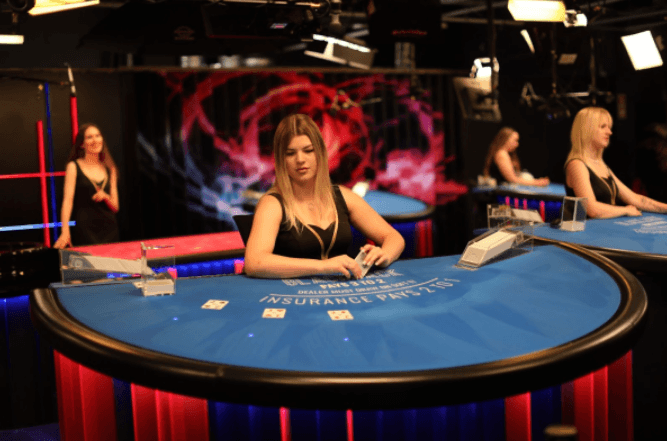
At first glance, it’s not so obvious that a live casino studio resembles a hotel lounge. In both cases, the spaces must not appear stiff and rigid, and the details must not draw attention to themselves. Before considering the arrangement of those pieces, the viewer is aware of the dealer, the table, the lights, the background, and the speed at which those pieces move. That’s an element of the experience for the person who’s only watching it from the screen as a tamasha india live casino, since they don’t get to see the room in person. A good studio has to address two issues – it needs to appear convincing from the real world, and it needs to be readable from the flat image created by a camera.
The room must look complete before players start to play the game.
While some people don’t use them, many hospitalities are judged before they do. A lobby, bar or private lounge can make a good impression on a guest before he’s even seated through the use of lighting, spacing, furniture and materials. The principle behind live casino studios is essentially the same. The table can be the focus of interaction, but also wall finishes, color temperature, seating, decorative surfaces and the amount of empty space around the dealer can be noticed by the eye. The frame appears to be a bit frenzied with too much visual action. If there isn’t enough, it can appear incomplete. The most successful sets tend to be made up of a few materials and colours, with this limited palette repeated with moderation. That imparts a calm quality to the room, without making the background become the central focus. This is more of an interior style than a simple set design.
Clothing influences the overall demeanor of the entire frame.
The outfit of a dealer is always looked at as a whole. It’s placed against the table and the wall, and against any light the studio utilizes. This alters the way people pick out clothing. A good-looking jacket in daylight might not look good in the studio. A neutral shirt could look like the background color. Fabrics that have too much sheen can reflect light, extremely busy patterns can appear more extreme on camera than they would in real life. Here is where fashion styling comes in the room. The outfit must provide a good contrast so that the dealer is easily distinguished, but it must be from the same environment. If the wardrobe and interior somehow satisfy, the scene appears more serene. When two things don’t match, one’s eye catches it, even if it can’t be stated in words.
When it comes to lighting, it’s not just about making the table visible.
When using studio lighting, it should emphasize the individual, add to the table’s color, and allow the cards or objects to be legible without squashing all the air out of the room. It’s a tricky act to perform. The setting might be bright enough to see what is going on, but too bright. Less harsh side lighting can add depth to the room, but may cause reflections on a shiny surface if the lights are not in the correct position. When a space is designed to be welcoming, but not so dark as to be unusable, the dilemma faced by the hospital designer is the same. It’s the same balance that casino live studios require. There are several details that can determine whether the image feels balanced and complete:
- Warm and cool light should not compete with each other within the frame.
- Reflective surfaces should be positioned away from direct glare.
- The dealer’s face should remain evenly illuminated.
- Table elements should stay readable without appearing overly bright.
- Background lighting should add depth without pulling attention away from the main scene.
These production choices may seem small on their own, but together they shape the overall mood of the studio and influence how polished the final image appears.
Texture matters more on camera than people expect
Texture is actually quite handy and can be flattened by a screen. No matter if the viewer is not able to touch the panels, they can achieve depth in the studio with velvet, matte paint, brushed metal, wood grain and fabric panels. The result is quite subtle yet easily discernible. If you build a room out of all smooth, shiny materials, the feeling of artificiality begins to creep in when it gets compressed into a video. That level of flatness is broken by mixed textures. Hospitality spaces use this technique constantly because different surfaces react to light in different ways. Live studios benefit from the same idea. A matte table next to a softly reflective trim, for example, creates separation without requiring brighter colors. Texture can therefore carry part of the visual identity while keeping the palette restrained. That makes the room feel richer without adding more objects.
The best sets don’t ask to be admired.
A live studio is effective when the design accepts the session and doesn’t continually assert itself. The viewer should not be distracted by the setting but should be able to see it. This is where the ‘hospitality comparison’ helps. A good interior in a hotel is not reliant on a single large element. They make use of proportion, materials and lighting, and regular styling that makes the entire place feel thought out. This is what live casino studios can do. The table, the dealer, background, lighting and the digital all share the same frame and each choice will impact the others. Polished result is created through coordination, not through showmanship. When it’s set up properly, this studio isn’t a tech area that centers around a camera and more of a space that has its own visual character.